The Consequence of a Partisan Court: Pennsylvania’s Anti-Democratic Rejection of the Green Party

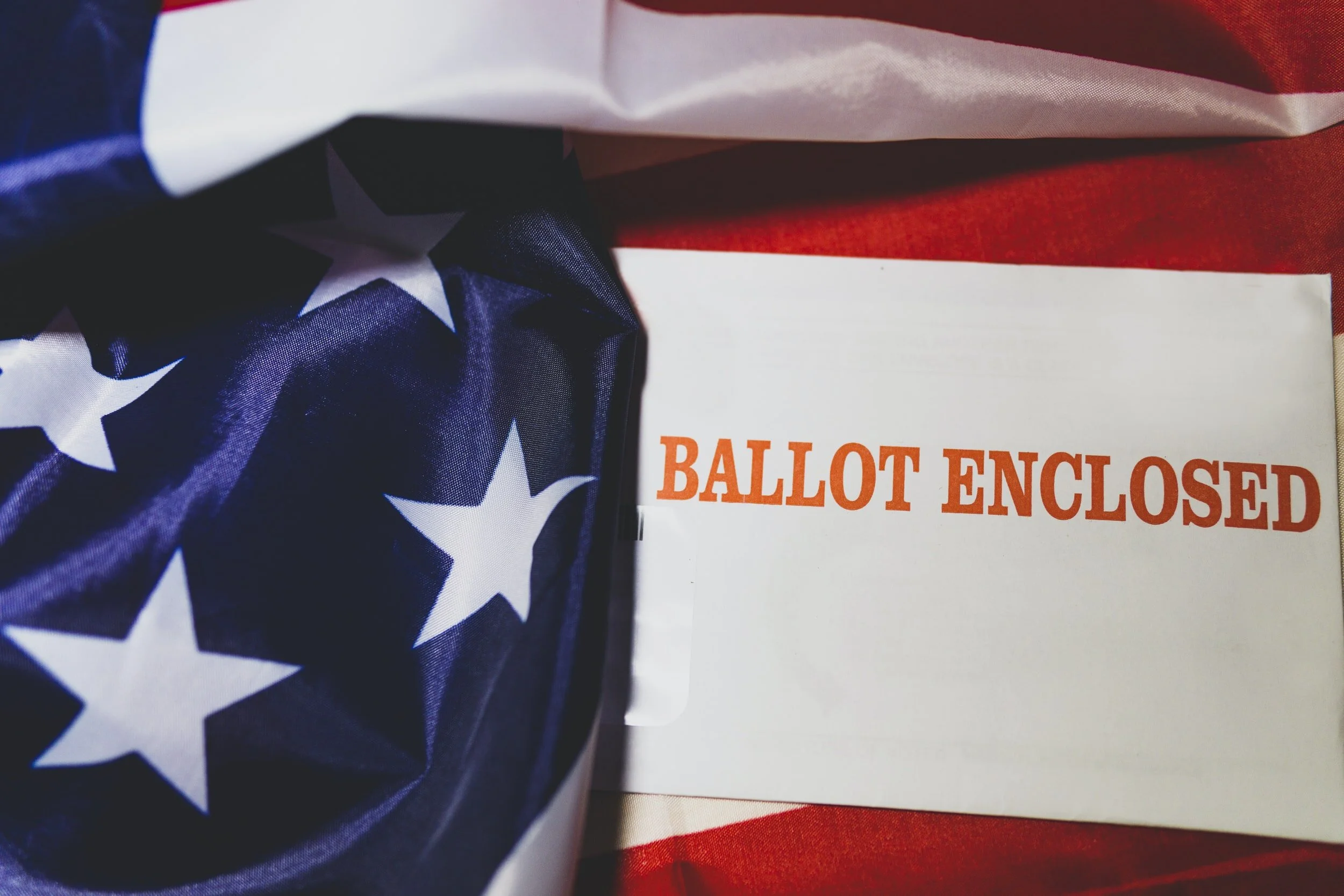
On September 17, the Commonwealth of Pennsylvania began printing ballots for November’s election after the Pennsylvania Supreme Court made its final decisions regarding ballot access. In southeastern Pennsylvania alone, over 600,000 voters had already requested mail-in ballots. Members of the major parties awaited the chance to cast their vote for the presidential ticket of their choice. However, not all the presidential tickets were actually represented on the ballot; the Green Party’s candidates for president and vice president had been struck from the ballot over a filing error in the Pennsylvania Supreme Court case In Re: Nomination Paper of Scroggin. An examination of this case and the court that decided it reveals that partisan ballot decisions like In Re: Scroggin undermine democratic principles and subvert evenhanded justice while enabling the duopoly of the major parties.

Read More
When U.S. Law Extends Beyond its Borders: The LIBERTAD Act and Extraterritoriality

On April 17th, 2019, U.S. Secretary of State Mike Pompeo expanded the implementation of the Cuban Liberty and Democratic Solidarity (LIBERTAD) Act of 1996. "For the first time," he announced, "claimants will be able to bring lawsuits against persons trafficking in property confiscated by the Cuban regime." The Trump Administration activated Title III of the LIBERTAD Act, a statute that had been suspended by every presidential administration since the Act's creation. Title III secures the right of U.S. nationals to claim property that had been confiscated by the Cuban government on or after January 1st, 1959 from any individual using, selling, or benefiting from it.

Read More
Gerrymandering & The Supreme Court

Gerrymandering, or the act of redistricting in a way that advances a political party’s election efforts, undermines our electoral process through a partisan lens. In the landmark case Gil v. Whitford (2018), the Supreme Court ruled that the case lacked sufficient evidence needed to prove the “packing and cracking” gerrymandering allegedly completed by the Republican Party in several Wisconsin districts. In Benisek v. Lamone (2018), the Supreme Court ruled that the Court was not in a position to decide on an issue of possibly gerrymandered maps in Maryland, stating that intervention would be “against the public interest.” Both of these recent cases demonstrate the highest court’s refusal to get involved in the gerrymandering issue, which raises the question: should courts interfere with gerrymandering at all, and if so, how should they go about it?

Read More
Could China Be Charged for the Xinjiang Conflict? Exploring the Applicability of International Genocide Law

The cultural and religious customs practiced by the Uyghurs have been alleged to be inimical to the unity of the Chinese state. This has led to measures including the alleged detainment of more than a million Uyghurs in “re-education camps” by the government, as well as state-led campaigns such as the 2014 “Strike Hard Campaign against Violent Terrorism” which, as the Human Rights Watch found, had resulted in the imprisonment of several Uyghurs without a proper trial. These occurrences highlight the incongruity between the rights guaranteed to religious and ethnic minorities in the constitution of China and the treatment of these groups in reality.

Read More
Al-Khatib Trial, the Nuremberg of the 21st century? Germany’s landmark step towards international criminal accountability

In February 2020, Syrian officials Anwar Raslan and Eyad Al-Gharib were arrested in Berlin and Koblenz, Germany. Raslan allegedly headed the Investigative Unit in the General Intelligence Service Detention Center in Damascus and Al-Gharib was alleged to be employed in a subdivision of this unit, Al-Khatib. Raslan reportedly perpetrated 4,000 cases of torture, 58 murders, and several individual cases of sexual assault and rape between 2011 and 2012. Al-Gharib was charged with aiding and abetting acts of torture while he was employed at Al-Khatib. The defendants were charged in Germany for crimes against humanity in violation of Section 7 of the VStGB (Code of Crimes Against International Law) and for other crimes of torture, murder, and assault, in violation of multiple sections of the StGB (Criminal Code).

Read More
After Sulfur and Flame: Anti-Sodomy Laws and the Fourteenth Amendment

On September 23, 2020, the American Civil Liberties Union of Idaho and accompanying civil rights parties filed Doe v. Wasden, a complaint for injunctive and declaratory relief before the U.S. District Court for the District of Idaho. The plaintiff, an Idaho resident using the pseudonym John Doe, moved for a judgment to declare Idaho Code § 18-6605 facially unconstitutional. The state law in question, infamously labeled as Idaho’s Crime Against Nature statute, criminalizes consensual oral and anal sex. Doe’s conviction is a blatant violation of the Fourteenth Amendment’s Due Process Clause and patently disregards the Supreme Court’s 2003 ruling in Lawrence v. Texas.

Read More
Banksy Hits a Wall: Why the Artist Secured Trademarks Out of Necessity, Not Bad Faith

Banksy, whose real name and identity have never been formally disclosed, has long made anonymity central to his work and identity as an artist. His anonymity is not only central to his artistic persona, but it also contributes to the value of his creations, many of which have fetched seven and eight-digit prices at the world’s most prestigious auction houses. Yet as Banksy’s fame and notoriety have increased, so too have the number of people profiting off the appropriation and sale of his designs. However, Banksy’s anonymity made the fulfillment of this wish difficult: in order to allege copyright infringement on his designs, Banksy would have to reveal his full, legal identity to prove he is the “unquestionable owner,” which would severely, if not irreparably, undermine his persona and the value of his work.

Read More
The Fourth Amendment and Privacy Risks in the Digital Age

As individuals progressively incorporate digital devices into their daily lives, many aspects of law need to be adjusted to better reflect the interests of those individuals. One particularly glaring blind spot in the law is the collection of internet users’ data. Every occurrence in cyberspace is recorded, and anything recorded is accessible. It is thus critical for the Supreme Court to revise and update their interpretation of the Fourth Amendment to better address the current conditions of online privacy.

Read More
Kahler v. Kansas (2020): Unjust Abolition of the Insanity Defense, or Criminal Justice Reform?

On November 28, 2009, following a divorce and an episode of severe depression, James Kahler drove to a family gathering where he shot and killed his ex-wife, two daughters, and their grandmother. At trial, he was convicted of four counts of first-degree murder. Despite Kahler’s history of mental illness, the defense was barred from using the insanity defense because Kansas state law denies its use when criminal intent can be proven.

Read More