Selling the American Dream: Constitutional Limits of the Gold Card Program
On September 19, 2025, the Trump administration announced the Gold Card Program, a way to expedite eligibility for an immigration visa for those who can provide a significant financial contribution. More specifically, an individual must donate at least one-million dollars, while a corporation can donate two-million dollars on behalf of an individual. The donations go towards a separate fund to “promote commerce and American industry” and relieve the national debt. On December 19, 2025, President Donald Trump stated the program had reached $1.3 billion in sales.
Read More
The Speech or Debate Clause in the Age of Digital Oversight
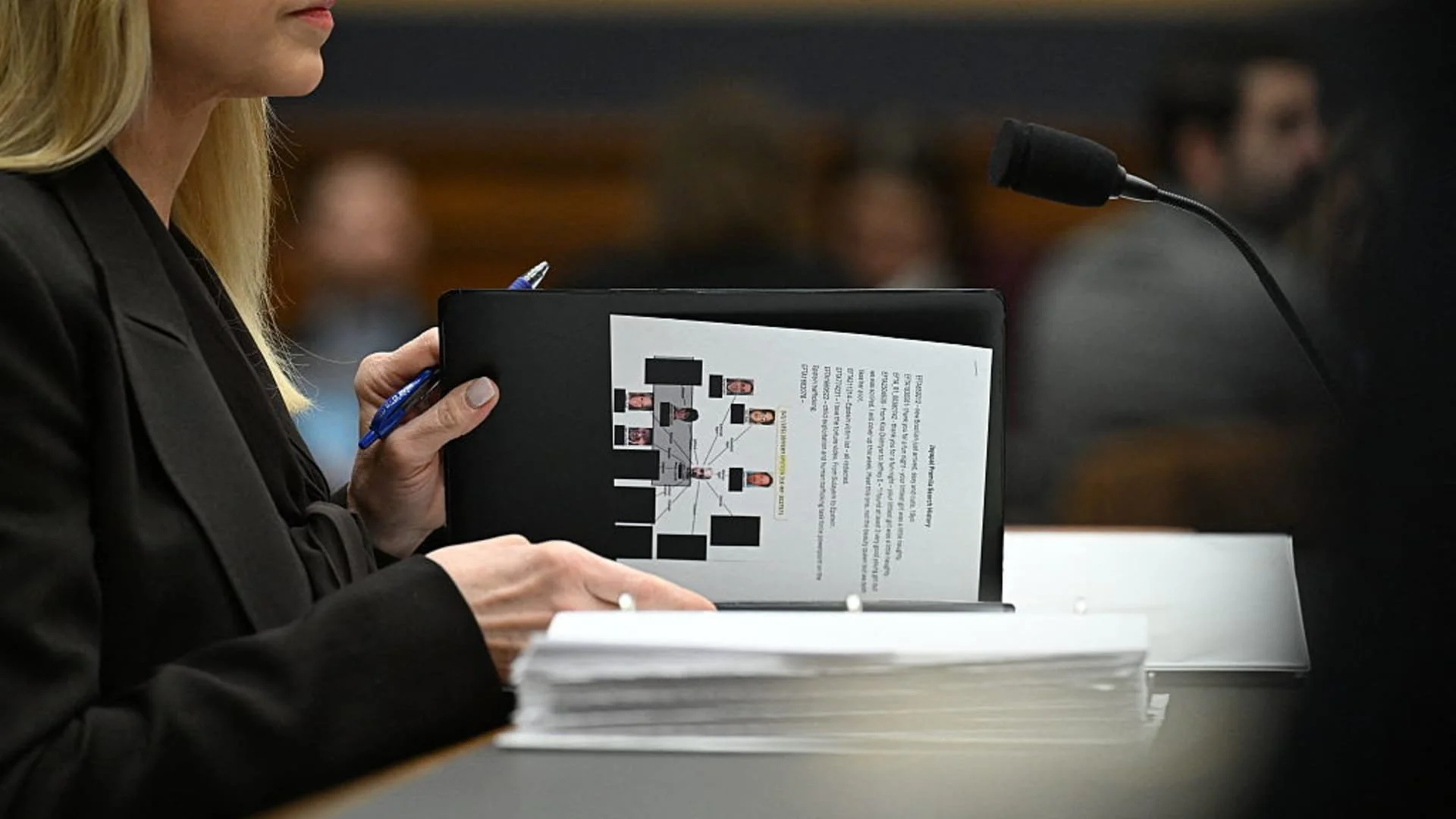
The legal tension surrounding the Epstein Files started long before the release of three million pages of documents, following Jeffrey Epstein’s death in federal custody in August 2019. The closed-door discussions of the Epstein files sowed mistrust and fueled conspiracies among the general public and lawmakers, mounting pressure on President Trump’s Department of Justice (DOJ) to release the full, unredacted records of the sex trafficking investigation. Despite the concerns of violating victims’ privacy, release of the files became a rallying cry across social media and Capitol Hill, culminating in Representative Ro Khanna of California’s introduction of the Epstein Files Transparency Act to the House of Representatives on July 15, 2025. On November 19, 2025, President Donald J. Trump signed the bill into law, granting Representative Ro Khanna (D-CA) and Thomas Massie (R-KY), along with four other members of Congress, access to review the unredacted files to conduct an oversight investigation.
Read More
Who Pays for Climate Harm? State Tort Law and Federal Preemption
The Supreme Court’s 2011 ruling in American Electric Power Co. (AEP) v. Connecticut held that the Clean Air Act takes precedence over federal common law public nuisance claims involving greenhouse gas emissions, since Congress has vested the Environmental Protection Agency (EPA) with regulatory authority over those emissions. However, the Court did not rule on whether the Act also preempts tort claims under state law. While it left that matter open and unresolved, it is a question that is now at the heart of climate liability litigation. Today, as cities including Baltimore, Honolulu, and a number of California municipalities file state tort suits against fossil fuel companies for damages and compensation tied to climate-related harm, the fossil fuel industry’s primary line of defense is to argue that the Clean Air Act preempts these claims entirely. However, the defense fails: the displacement of federal common law and preemption of state law are different legal doctrines governed by different standards. A reading of the Clean Air Act’s text, its regulatory structure and its saving clause demonstrates no congressional intent to foreclose state tort remedies.
Read More
Navigating the Legal Gray Areas of AI Credit Scoring Across International Borders
The accelerated development of Artificial Intelligence (AI) has led to widespread integration, and huge efforts to modernize and streamline operations through AI. As governing bodies continue to tackle the challenge of properly regulating mass AI use, varying policies have arisen, especially across international borders. Among all international relationships, one of the most crucial is that between the United States and the European Union, with the two entities sharing the largest Foreign Direct Investment (FDI) relationship in the world. Considering this, a curious case study here is the integration of AI into credit scoring systems by major financial institutions that operate in both regions. Cross-border regulatory inconsistencies create compliance burdens for financial institutions and obscure accountability when conflicts arise. For consumers, regulatory inconsistency raises critical questions about data collection, transparency, and their legal recourse against automated decisions. With this in mind, an equivalence agreement with characteristics of a mutual recognition agreement (MRA) would be beneficial allowing individual countries to retain their existing laws, while ensuring the proper enforcement of mutually agreed upon standards and the revision of laws to an equivalent standard.
Read More
The Eye of the Storm: Currency Manipulation and the WTO-IMF Regulatory Gap Behind the Tariff Resurgence
The 2025-2026 U.S. tariff escalation is often dubbed “unprecedented,” and considered an unanticipated byproduct of the capricious storm that is electoral turnover. It has devastated the fragile multilateral trading order the United States spearheaded in 1947 and, in its wake, left a global question of what is next for trade policy. However, when the skies clear, the legal context will reveal that the contemporary resurgence of tariffs did not arrive without warning, and its clouds had been gathering for decades. The regulatory gap between two international institutions, structurally incapable of monitoring the shifting climate of trade law on the horizon, has always existed. This article analyzes the legal statutes that permit and reflect the changing culture of trade law, offering an alternative to understand the post-2025 expansion of tariff measures. Beyond its evident status as a political development, I argue that it is the product of a structurally inevitable legal vacuum at the international level.
Read More
Incipient Monopolization in Digital Streaming: Judicial Oversight of Contemporary Entertainment Consolidation
On February 27, 2026, Paramount Global confirmed a $110 billion all-cash offer to acquire Warner Bros. Discovery, creating one of the largest media mergers in U.S. history. The offer followed a bidding war with Netflix; however, Warner Bros. ultimately signed the initial offer from Paramount. Netflix later ceased its bidding after the United States Department of Justice (DOJ) began an antitrust investigation into the proposed Netflix-Warner Bros. merger. Paramount’s offer and acquisition were not met with the same scrutiny. Paramount’s waiting period, mandated by the Hart-Scott-Rodino Antitrust Improvements Act (HSR), expired on February 19, 2026. The legal barriers that Netflix and Paramount each faced were markedly different. Warner Bros. Discovery functions as both a major content producer and distributor, owning cable networks and streaming platform HBO Max, meaning its acquisition by another major content producer and distributor, such as Paramount or Netflix is significant for antitrust analysis.
Read More
Denmark, Greenland, and the United States: Whether a U.S. Purchase of Greenland is Legal
During his first term, President Donald Trump expressed interest in purchasing Greenland, a semi-autonomous country of the Kingdom of Denmark, which comprises three constituent countries that are Denmark, the Faroe Islands, and Greenland. He cited security-based and resource-based rationales. Greenland’s location in the North Atlantic could provide strategic advantages against Russia and China, and its vast reserves of natural resources could be used for industrial and military purposes. Since Greenland is a constituent country of the Kingdom of Denmark, it can maintain its own self-governing authority but lacks full sovereignty over foreign affairs and defense and must refer to Denmark when making decisions involving those matters. In response to President Trump’s statements, Denmark and Greenland were firmly opposed to his pursuit. Ultimately, no deal was obtained between Denmark and the U.S. and Greenland remained under the Kingdom of Denmark. Now, in his second term, President Trump has revived his efforts in purchasing Greenland, citing the same reasons. Yet revitalized interests are far from enough for President Trump to acquire Greenland. Under current international and domestic law and legal precedent, the United States’ acquisition of Greenland would be an illegal act.
Read More
The Disenfranchised Generation: How the Supreme Court’s Depletion of the Voting Rights Act Suppresses Youth Voter Engagement
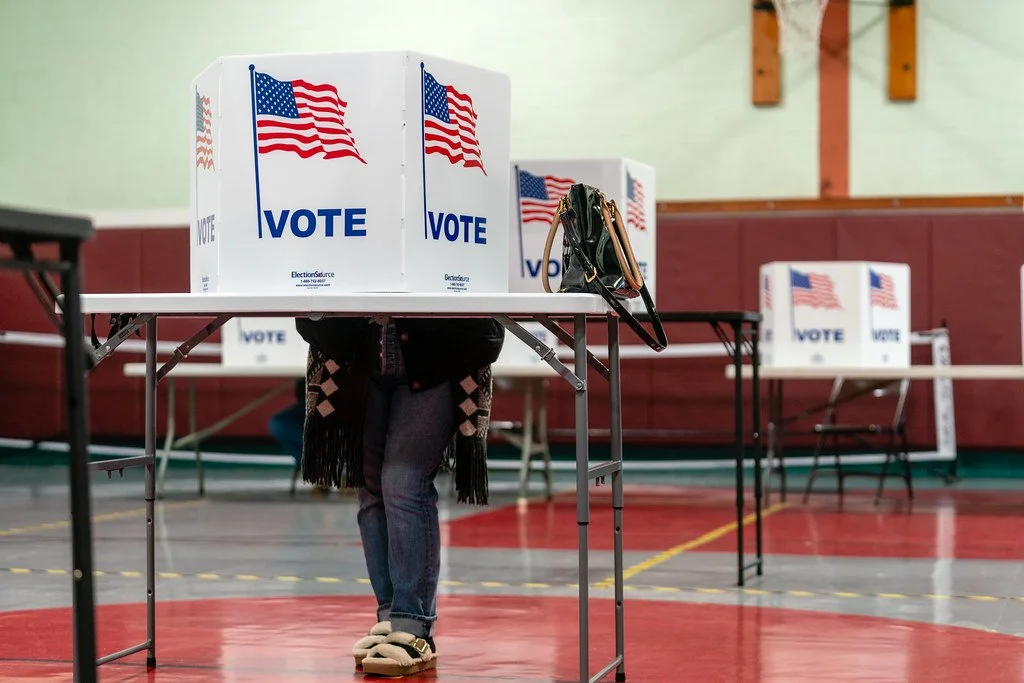
At the center of American democracy, the 26th Amendment guarantees 18-year-olds the right to vote. However, Supreme Court-approved state voting rules have made it harder for young Americans to vote. In Crawford v. Marion County Election Board (2008), the Court upheld Indiana’s voter ID law, which requires voters to present a government-issued photo ID showing the name, photograph, and expiration date. Acceptable IDs include an Indiana driver’s license, a state ID card, or certain federal IDs. However, most student IDs are not accepted because they often lack required features under state law.
Read More
The Illusion of Equity: Why “Ability to Pay” Mandates Require Standardized Bail Guidelines
The use of bail has been heavily contested and reshaped across the United States since the late 2010s. At the heart of this debate is one main point of contention: whether judges should consider a defendant’s “ability to pay” when setting bail amounts. Tennessee and New York represent the opposite ends of the bail reform spectrum, and a comparison between the two demonstrates that neither approach has been able to properly address the issue’s constitutional premise. While Tennessee recently mandated that judges disregard financial status, New York has moved in the exact opposite direction.
Read More
Why Facial Recognition Technology Demands A Warrant
Facial recognition technology (FRT) seems to be everywhere these days—it is in malls, airports, and our ever-present smartphones. First commercialized in the mid-1990s, FRT today is used widely in the police investigation process due to its efficiency. Despite how commonly the technology is used as an investigative tool, the legal protections to govern its use and avoid government overreach have not been updated accordingly due to a lack of federal FRT legislation. The Eighth District Court of Appeals case State v. Tolbert (2025) reveals this lack of judicial oversight over FRT. While the case is still active and ongoing, the facts established in the case and the rulings to date point to the need for clearer FRT regulations.
Read More
Auffray v. Columbia and the Dispute over College Walk
With the closure of College Walk in 2023, many residents of Morningside Heights were left disgruntled by the loss of a historical pathway to traverse the university campus. Hence, in January 2025, petitioners filed a Verified Amended Petition in the New York County Supreme Court against Columbia University, its trustees and former president, and several municipal defendants. According to the pleading, the closure is unlawful on four independent legal grounds: a claimed public pedestrian easement originating in 1953 when the city closed the street and transferred property interests; an Article 78 proceeding designed to compel the City to enforce public access against the university; a theory of public nuisance based on the loss of a widely used pedestrian corridor; and disability-access claims under the Americans with Disabilities Act and § 504 of the Rehabilitation Act. Each of these arguments depends, directly or indirectly, on the existence of a legally enforceable right of public passage over College Walk. Without such a right, the petition is difficult to sustain.
Read More
On the Supreme Court's Hidden Hand in Immigration Policy
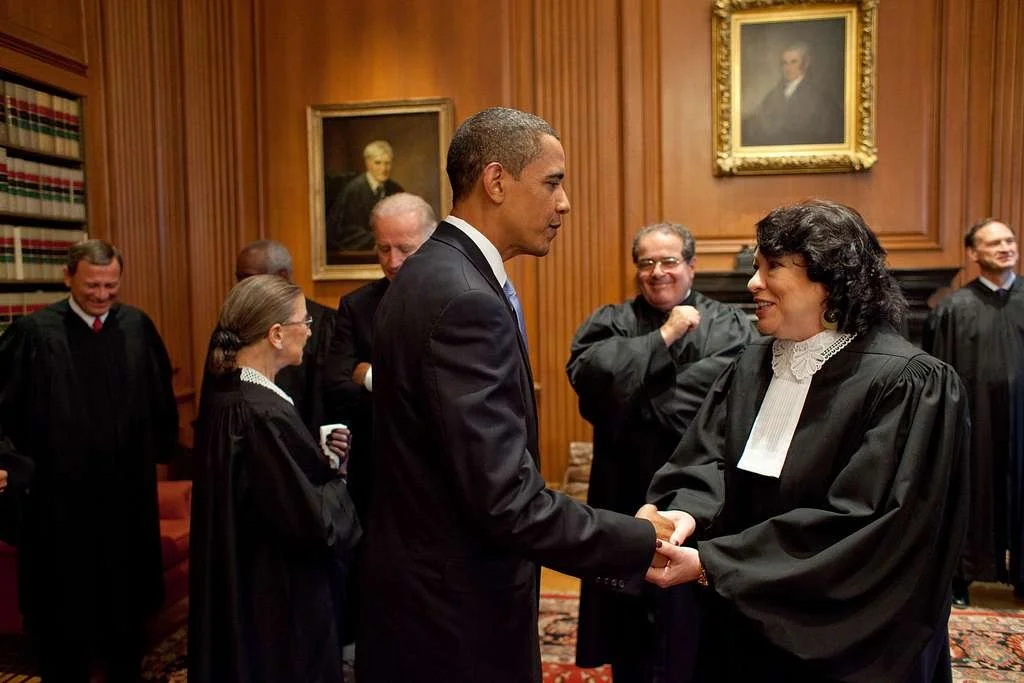
On September 11, 2019, the Supreme Court issued an unsigned per curiam order that dramatically altered the course of a major immigration policy. In a one-paragraph decision containing no explanation, the Court stayed a nationwide injunction that had blocked enforcement of the Trump administration's new "asylum-transit" rule, a regulation denying asylum eligibility to any non-citizen who traveled through a third-world country en route to the United States without first seeking protection there. The state meant that the government could immediately implement the asylum transit ban despite lower courts' findings that the policy likely violated federal immigration law and administrative procedural requirements. Justice Sonia Sotomayor filed a brief dissent where she warns that the Court's precipitous intervention short-circuited the normal judicial process and failed to honor the "extraordinary" showing needed for such emergency relief. Apart from Sotomayor's dissent, however, the court offered no legal reasoning for its decision.
Read More
Who Owns Ideas? Humans versus AI in Intellectual Property
The Artificial intelligence actress Tilly Norwood was created in February of 2025, by the UK-based production company Particle6. She looks and acts completely human and, since her creation, has been in a few short films with a large presence on social media. However, since her first appearances, the AI-actress has faced severe backlash across social media. Norwood’s debut was only the beginning of a sweeping campaign with AI emerging in the entertainment industry. As NBC points out, AI filmmaking over the past few years has quickly entered mainstream media. Studios have begun working with AI companies to explore the technology’s potential in content creation, and apps like Sora by ChatGPT allow people to create, upload, and view AI-generated videos featuring anyone via a face-scan and text prompt. The use of AI across art mediums has quickly become a polarizing topic to many artists. In an age where AI has inevitably found its way into entertainment and art industries, how does intellectual property law create boundaries that protect human-generated art, and where, if at all, is the boundary drawn on what can be protected as intellectual property when AI is used? With AI rapidly evolving, intellectual property law must be able to distinguish between artists who use AI and works of art that are simply machine-generated, in order to protect human creativity and ingenuity without blocking the use of technology.
Read More
The €1 Billion Game of Tag: Europe's Costly Hunt for the Sea Raiders
They live by the sea, but outside the law. What’s the first thing that comes to mind when you think of pirates? Perhaps Captain Jack Sparrow, multi-masted ships, treasure chests, or the Jolly Roger flag. The enduring legacy of piracy doesn’t revolve around treasure; it revolves around the archaic legal systems molded to destroy pirates’ enterprise. While modern usage defines piracy as “the act of attacking ships to steal from them,” this oversimplified definition fails to reflect the term’s evolution. The critical shift, since the 14th century, lies in the lack of state sanction. By overlooking this crucial element, the current definition depoliticizes the crime, treating it merely as a violent act and failing to recognize its genuine implications for national sovereignty. Former Secretary of State Hillary Clinton posited that piracy was ‘‘a seventeenth-century crime’’ requiring ‘‘twenty-first century solutions.” This further highlights the persistent tension in how outdated legal assumptions continue to shape modern anti-piracy approaches.
Read More
The Erosion of Due Process: An Invisible Justice in New York’s Immigration System
In October 2025, the New York Civil Liberties Union, ACLU Immigrants’ Rights Project, and Make the Road New York filed African Communities Together v. Lyons, a lawsuit against ICE challenging the agency’s courthouse arrest practices, under which hundreds of immigrants in New York City were detained during court hearings despite having no criminal records. The high arrest rate in the state is a huge enforcement tactic deployed by ICE that has expanded significantly. The recent rulings from the court provide proof the country needs a more powerful state protection in our society and a more thought-out community for immigrants. The ICE enforcement in New York City has been characterized by mass courthouse arrest rates, limited legal aid, and defied state protections. Recent court rulings expose the due process crisis in New York’s immigration enforcement system, revealing the urgent need for stronger state protections to shelter immigrant access to justice.
Read More
Inside the Ethiopia–Sudan Border Crisis: From Colonial Boundaries to Modern Conflict
Ethiopia-Sudan border tensions can be traced back to the 20th century, with the presence of a third party, England, which exercised colonial control over Sudan. In 1902, the British drew a border between Sudan and Ethiopia, as outlined in the Anglo-Ethiopian Treaty of 1902. Although Ethiopia’s name is included in the title, this agreement omitted Ethiopia’s consideration as to where the border should be drawn. The border was hastily drawn by an outside party that was barely cognizant of the sensitive cultural or ethnic relations. Groups with similar heritage were split apart without a second thought. The highly contested al-Fashaga region was claimed as part of Sudan by the British. This region is highly fertile and provides many coveted resources. Despite both Sudanese and Ethiopian farmers living in and cultivating this area, British Sudan claimed the entire region. This lack of an official and fair agreement allowed for more conflicts between the two nations, the impacts of which are still felt today.
Read More
The 22nd Amendment and Trump’s Possible Path to Reelection
Many have questioned whether President Trump will seek a third term. While the 22nd Amendment establishes a strict two-term presidential limit, President Trump has hinted at running again in 2028, noting that he would “love to do it,” and his backers like Steve Bannon have gone so far as to say that he will not only run, but will win reelection in 2028 in order to “finish what we’ve started.” This article will investigate possible loopholes that the Trump administration may take to bypass the 22nd Amendment. Three main avenues exist for President Trump: directly repealing the 22nd Amendment, becoming vice president or Speaker of the House in the next administration then succeeding the acting president upon his or her resignation, or declaring war against a foreign nation and claiming that war powers supersede term limits.
Read More
America’s Antitrust Renaissance: Big Tech and the Sherman Act
The United States government is facilitating an antitrust renaissance. The emergence of neo-trustbusting comes in the wake of Big Tech corporations toeing the line between anti-democratic monopolies and fair economic competition. Recent court decisions and ongoing cases regarding the Big Tech industry have dealt with the issue of what monopolies look like in the world of tech, and how far the federal government can intervene in private enterprise in the name of prioritizing democracy. The modern revival of antitrust laws in U.S. federal courts, largely driven by developments in the Big Tech industry, has prioritized safeguarding democracy but is showing signs of blurring the line between corporate competition and judicial intervention.
Read More
Rethinking Responsibility: Pakistan’s Flood Crisis and the ICJ’s 2025 Advisory Opinion
The International Court of Justice’s 2025 advisory opinion regarding climate change does not resolve the climate crisis. What it offers Pakistan is something more precise: a legal vocabulary that understands the injustices it lives through. Behind every submerged house and broken embankment is a deeper question: who is responsible for protecting the planet, and what obligations do states have when their choices place entire nations at risk? By reframing climate devastation as a matter of responsibility rather than misfortune, the Court shifts the discussion from humanitarian response to legal obligation. For Pakistan, one of the world’s lowest emitters and most flood-vulnerable states, this reframing carries profound consequences.
Read More
Who Shut Down the Government? Unpacking the Legal Battle Behind the 2025 Federal Shutdown
The 2025 government shutdown, which ended on November 12, became the longest in U.S. history. During the shutdown, at least 670,000 federal employees were laid off, while about 730,000 kept working without pay. Although the White House’s public-facing “government shutdown clock” attributed the lapse to congressional action, the underlying circumstances were legally more complex. The administration directed federal agencies to initiate large-scale Reduction in Force (RIFs) during the funding gap, despite longstanding statutory limitations on personnel actions in such periods, representing an unprecedented extension of executive authority. According to the unions challenging these actions, the administration lacked lawful authority to bypass notice requirements, disregard established RIF procedures, and reinterpret the Antideficiency Act as permitting the suspension of statutory duties. Their lawsuit, which has already secured a temporary restraining order blocking some layoffs, asserts that the firings were procedurally defective and exceeded permissible executive authority, raising questions under both federal personnel statutes and the constitutional separation of powers.
Read More