Public Funds, Private Schools: The Constitutional Question of Vouchers
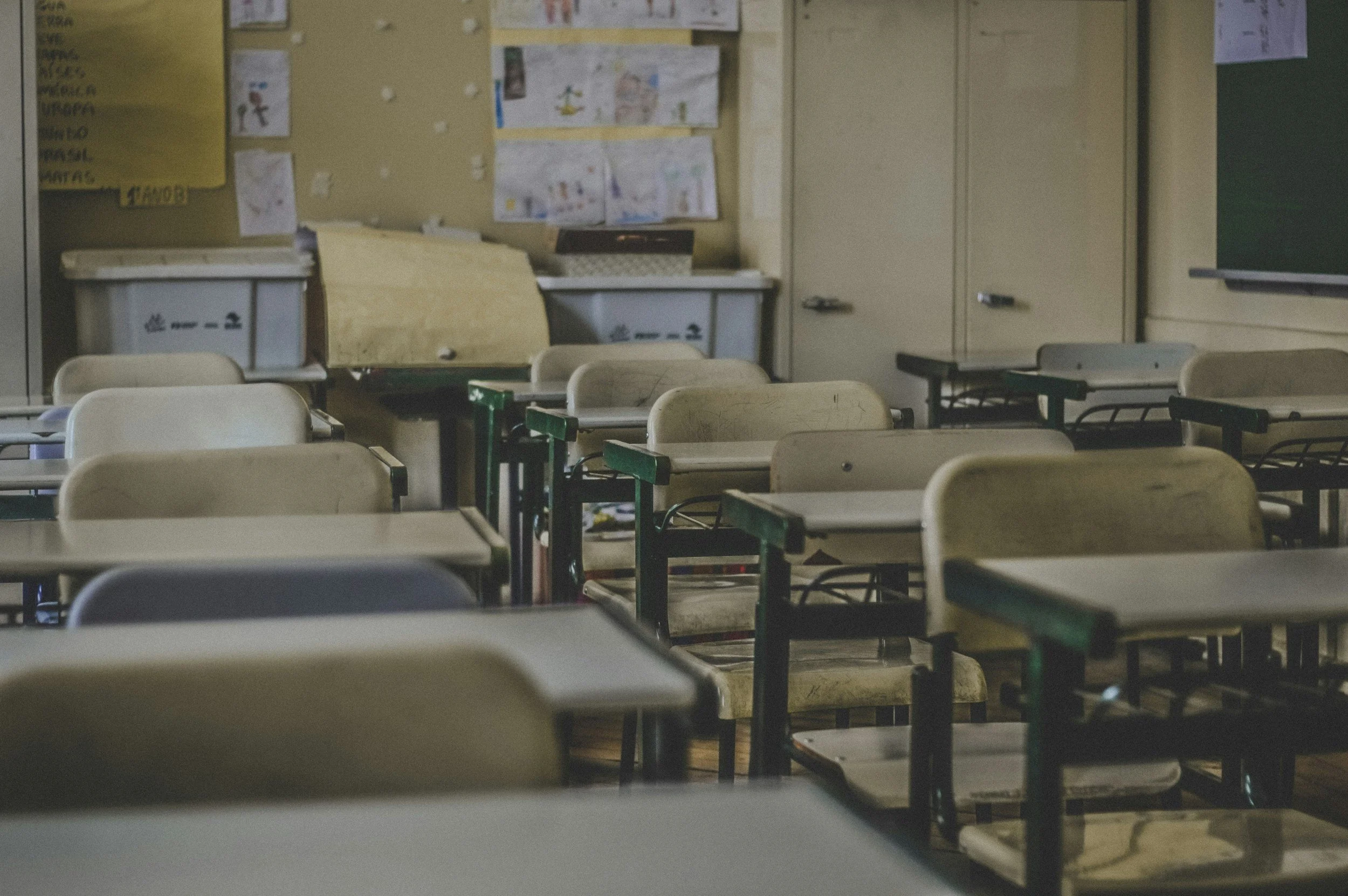
In 2024, in Oklahoma Statewide Charter School Board v. Drummond (2025), the Supreme Court struck down Oklahoma’s plans to create a virtual Catholic charter school, citing it as an unconstitutional use of government funding for religious purposes. Yet, the same Court has allowed states to fund the same outcome—religious education—through school voucher programs. School vouchers are government-funded grants that parents can use to “send their kids to the school of their choice, even private, religiously affiliated schools.” This funding is typically set aside for low-income families, children with disabilities, or families zoned to a failing school system to find alternative school funding. Although these vouchers appear to offer benefits on the surface, they have negative constitutional implications; their foundations pose a threat not only to the Constitution but also to public education funding.
Read More
Design as Conduct: Reframing Platform Architecture in Contemporary Tort Law
In October 2025, the City of New York, the New York City School District, and New York City Health + Hospitals filed a sweeping complaint alleging that major social media platforms deliberately engineered features that induce compulsive use among children and adolescents, thereby driving a citywide youth mental health crisis. The complaint describes platform architectures such as endless algorithmic feeds, intermittent variable rewards, persistent notifications, and weak age verification as design features purposefully calibrated to maximize engagement and advertising revenue. It seeks injunctive relief, abatement, and damages to address the public burdens these design choices have created. These allegations reflect a central doctrinal question for tort law: when harm stems from a platform’s design rather than user-generated content, what avenues of liability remain available to plaintiffs? This article argues that contemporary litigation is increasingly reframing platform design itself as actionable conduct, prompting courts to reconsider how traditional tort doctrines apply to algorithmically engineered harms.
Read More
The Shadow Docket's Shadowy History and an Argument for its Alteration
Whether it was a dispute over a Texas abortion law in 2022 or a fight over federal research grants in 2025, shadow dockets have been heavily utilized recently to make a variety of decisions. The shadow docket, also known as the emergency docket, refers to a different pathway cases may take when entering the Supreme Court of the United States (SCOTUS). Upon appeal to the highest court, cases may enter either the merits docket, where most landmark cases are decided, or the shadow docket, and progress through the court rapidly. When an appealing party files a petition for a writ of certiorari to SCOTUS, there are two options, to petition the Court and be placed on the list of merit docket cases for the regular season while awaiting approval, or petition for the shadow docket with an emphasis on urgency.
Since the inception of SCOTUS, the Court has utilized shadow dockets to make decisions without the detailed explanations and full hearings that are standard on the merits docket, sometimes even releasing “midnight” decisions. Without proper hearings that are typical of cases on the merits docket. Such practices create an incredible sense of mystery around shadow docket decisions and the reasoning behind their conclusions. For that reason, information and research into this topic is sparse and often contradictary, which only works to further obscure the system. This article will cover the foundational issue with shadow dockets and argue against the current use of them within the United States Federal Court System. As presently employed, the use of shadow dockets by the Supreme Court is unconstitutional due to its inability to fulfill due process, lack of transparency, issues it creates with the separation of powers, and issues with effective application; demonstrating the urgent need for reform.
Read More
Surveillance Beyond Borders: How Courts Can Check the Power of AI Within the Immigration System
With the development of artificial intelligence (AI), what once was a technology of the obscure and distant future has now become part of our daily lives. From digital assistants and chatbots to social media platforms and search algorithms, AI has expanded into our reality. It has been implemented in fields ranging from healthcare and banking to analytics. Now, it is increasingly being implemented within the immigration system. Within the United States Department of Homeland Security (DHS), AI algorithms are used to analyze facial expressions, inspect fingerprints and faces, and survey remote border crossings. Its usage has transformed how countries like the United States are managing their inflow of migrants and asylum seekers. Yet, the quickness with which AI has been applied within the immigration system, both within the United States and internationally, dangerously threatens the privacy rights of citizens and non-citizens alike.
Read More
A New Age of Publicity: The NO FAKES Act and Federal Regulation on AI Replicas
In an age dominated by artificial intelligence (AI), the entertainment industry has evolved to reflect the capacity of new technologies to alter, enhance, or replicate human performances. As actors earn Oscars for AI-assisted performances and bands win Grammys for AI-generated music, questions have arisen concerning the future of art as human creation. The past several years have seen several lawsuits filed, contracts revised, and restrictions set in an attempt to regulate AI usage in the industry. One such effort, the 2024 Nurture Originals, Foster Art, and Keep Entertainment Safe (NO FAKES) Act, was recently introduced in both the Senate and the House of Representatives as an endeavor to protect actors’ and performers’ likenesses from the misuse of deepfake technology. While preemptive state laws and agencies like the U.S. Copyright Office support the creation of a national standard for restrictions on AI, the proposed legislation, as outlined in the current version of the NO FAKES Act, would encroach upon First Amendment rights protecting freedom of speech in digital spaces as interpreted and enforced by the current administration.
Read More
Chevron’s Fall and the Unraveling of California’s Clean Air Act Waiver
For over a decade, California has stood at the forefront of U.S. climate policy, using its Clean Air Act waiver to establish the nation’s most aggressive greenhouse gas emissions regulations in order to meet their goal of reaching carbon neutrality by 2045. However, in the wake of the overruling of Chevron deference in Loper Bright Enterprises v. Raimondo (2024) and the Supreme Court’s recent ruling in Diamond Alternative Energy, LLC v. Environmental Protective Agency (EPA) (2025), California’s Clean Air Act (CAA) waiver now rests on fragile ground. The overturning of Chevron deference alongside the recent ruling in Diamond Alternative Energy, LLC v. EPA signals that courts may now reinterpret the waiver provision more narrowly, undermining many states’ capacity to lead on climate regulation.
Read More
Executive Overreach of Title VI: Censoring Campus Speech
Following the October 2023 Hamas-led attack on Israel and the ensuing Israel-Palestine conflict, college campuses across the United States served as hotbeds for protest in opposition to U.S. involvement in the Middle East. Beginning in April 2024, pro-Palestinian encampments calling for divestment from Israel—most notably at Columbia University—spread to the lawns of over three thousand universities across the nation. As U.S. history shows, college campus protests, spearheaded by students and faculty, is certainly not a new concept. Educational institutions in the United States have long been the grounds overseeing transformative, youth-led protests from the civil rights movement, to anti-Vietnam war demonstrations, to prison divestment efforts, and more. Such activism has triggered nationwide conversation and policy changes. A historical parallel occurred over fifty years ago, in April 1968, when Columbia University’s Democratic Society and Afro-American Society student groups organized protests against the university’s ties to the Vietnam War, that led to thousands of students occupying campus buildings for a week. The university administration involved the police, arresting over seven hundred students and sparking a university shutdown. Nonetheless, the demonstration sparked national protest and attention and prompted Columbia to sever ties with military research and recruitment.
Read More
Deadlines and Dead Lives: Actualizing Equity Through Habeas Corpus
The “Great Writ,” or the writ of habeas corpus, is the only court order enshrined in the Constitution. The Latin phrase means “you have the body,” a mandate requiring authorities to bring an inmate before the courts to assess the legality of their detention following their petition for habeas corpus. Although legal scholars have traditionally framed the writ of habeas corpus as an equitable means to protect due process, interpretations of the writ have evolved, leading to increasing restrictions on its availability.
Over the last 30 years, approximately 57 people have been denied the “Great Writ” of habeas corpus in death penalty cases because their attorneys missed deadlines to file for the process. 30 of them have been executed – the most recent being Jeffrey Hutchinson in May 2025. Hutchinson was a Gulf War Veteran who urged his attorney to act swiftly and file on his behalf, yet a combination of attorney misconduct and court error resulted in his death.
Read More
Gatekeeping the Classroom: How Tennessee’s SB 0836 Threatens Equal Education for Undocumented Students
In 2025, although the second Trump administration made it clear that immigration enforcement would undergo stricter and more expansive measures, many underestimated the extent of the changes. By the end of January, videos and photos of U.S. Immigration and Customs Enforcement (ICE) agents taking alleged illegal immigrants into unmarked cars made their way into thousands of communities, spreading fear. The second Trump administration's new focus on the deportations of immigrants integrated into thousands of communities within the U.S. laid the groundwork for states that agreed with the President’s policy focus to put out bills and laws that aggressively targeted illegal immigrants in their state. In New Jersey, State Representative Paul Kanitra introduced bill A5233, otherwise known as the PLYLER Act, which aims to revise public school enrollment policies by imposing a tuition on all undocumented students. This bill asserts that education is not a constitutional right and that states should have the authority to control who qualifies for taxpayer-funded schools. Bill A5233 was referred to the New Jersey State Assembly Education Committee and remains pending in the early stages of the legislative process.
Read More