Private University Tax-Exemption: Pathways for Revocation of 501(c)3 Status
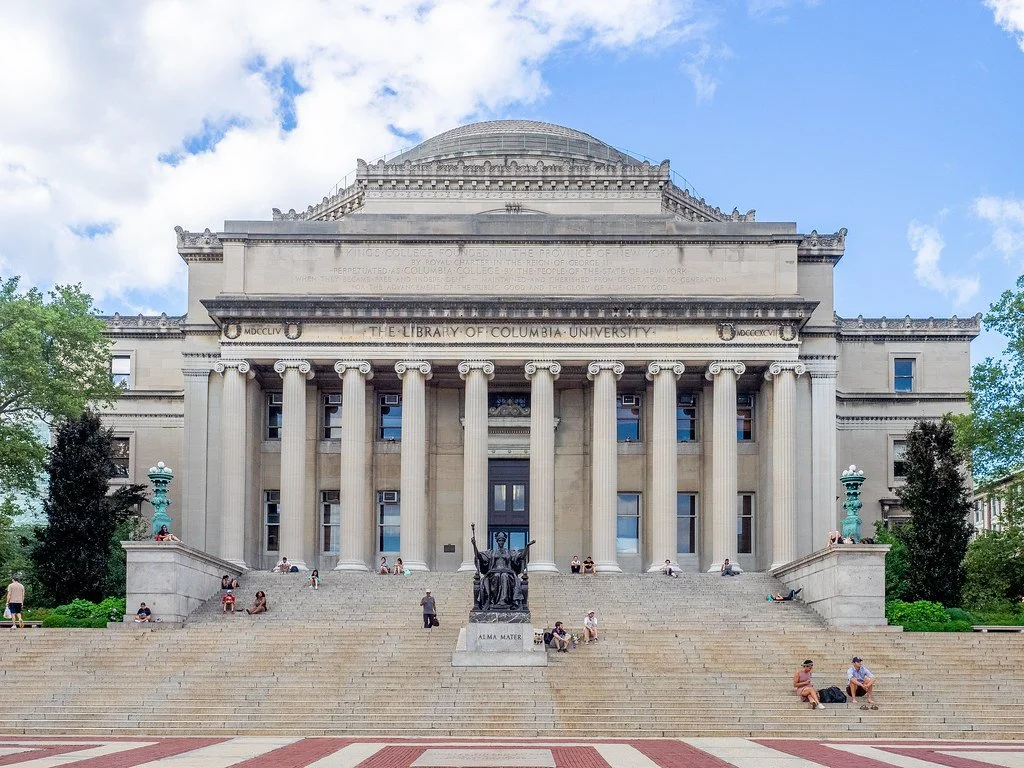
In recent years, politicians across the political spectrum have brought the topic of private university tax-exemption into national discourse. In 2023, then-New York State Assemblymember Zohran Mamdani proposed the REPAIR Act, aiming to revoke the 501(c)3 statuses of Columbia University and New York University which exempts them from federal income and state property taxes due to their designation as charitable organizations, on grounds of “egregious property accumulation.” [1] More recently, President Donald Trump called for the revocation of the tax-exempt status of Harvard University for alleged antisemitic policy. [2] In June, the Treasury Department considered a blanket rule change to remove tax-exemption from universities that consider race in admissions. [3] In the cases where figures or entities challenged private university 501(c)3 status through action beyond mere words, they—namely Mamdani and the Treasury—only considered the strategy of changing the tax law itself. By comparison, little attention has been paid to whether legal avenues exist for revoking 501(c)3 status through the courts. While there may be practical barriers to litigation, several legal avenues for revocation have been affirmed by the courts and are applicable to the contemporary context of elite private universities.
Read More
Energy, Environment, and Economics: The Legal Case for the EU’s Emissions Trading System II
On March 18, 2026, 10 European Union (EU) Member States sent a letter to the European Commission, labeling the bloc’s carbon regulation policy an “existential risk” to industrial sectors and calling for immediate reform. [1] The letter comes amid the broadening controversy over the expansion of the EU’s carbon mitigation programs. Under the European Climate Law, the EU has committed to collective greenhouse gas (GHG) reductions, instituting a variety of widely successful economic-based policy measures to support its objectives. Now, the EU is endeavoring to expand the system with the Emissions Trading System (ETS2), a cap-and-trade regulatory framework that seeks to cover an industry previously unaccounted for: fuel supply. According to a report released by the European Commission, “emission reductions in those sectors have been insufficient to put the EU on a firm path towards its 2050 climate neutrality goal” and “The ETS2 cap will be set to bring emissions down by 42% by 2030.” [2] The program is anticipated to become fully operational in 2028, yet reporting and monitoring of the relevant sectors have already commenced. [3]
Read More
An Analysis of Deference in the Court of Arbitration for Sport
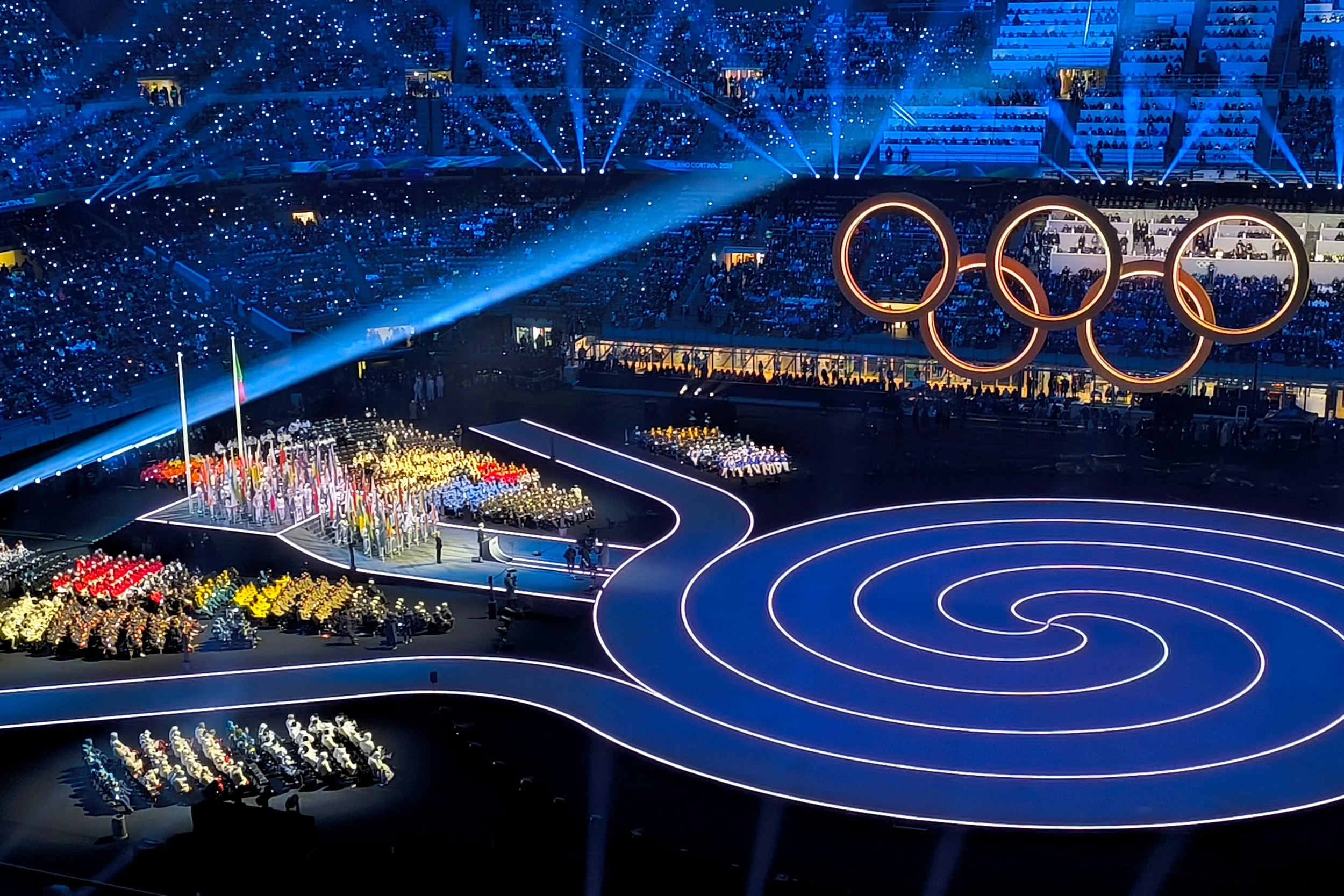
On January 2, 2026, after the Italian Sports Federation (FISG) published its list of selected athletes for the Milano Cortina Olympic Winter Games, Italian curler Angela Romei challenged her omission from the Italian women’s team. In response, the Ad Hoc Division of the Court of Arbitration for Sport (CAS), an arbitration tribunal that resolves disputes in international sports, dismissed her application on February 8, 2026. The sole arbitrator, who wields authority to make a final decision, explained how national sports federations have full prerogative in selecting athletes unless decisions are deemed “arbitrary, unreasonable, or in bad faith,” which Romei failed to provide compelling evidence for. [1] Due to the CAS’s highly deferential standard of review, athletes’ ability to successfully challenge disputes regarding misappropriations in selection criteria or violations of due process becomes limited, which negatively affects the legal protection of athletes.
Read More
How the Applicant for Admission’s Label Acts as a Tool to Erode Undocumented Immigrant Protections
Immigration and Customs Enforcement’s (ICE) presence in the U.S. has increased, most recently with officers being deployed to airports in major cities to support airport security operations. With ICE officers in the headlines as a result of this heightened presence, there has been increasing attention on immigration detention centers and the constitutionality of their policies and treatment of non-citizens.
Read More
The Suspendable Citizen: Citizenship and Political Membership in Hungary’s Fifteenth Amendment
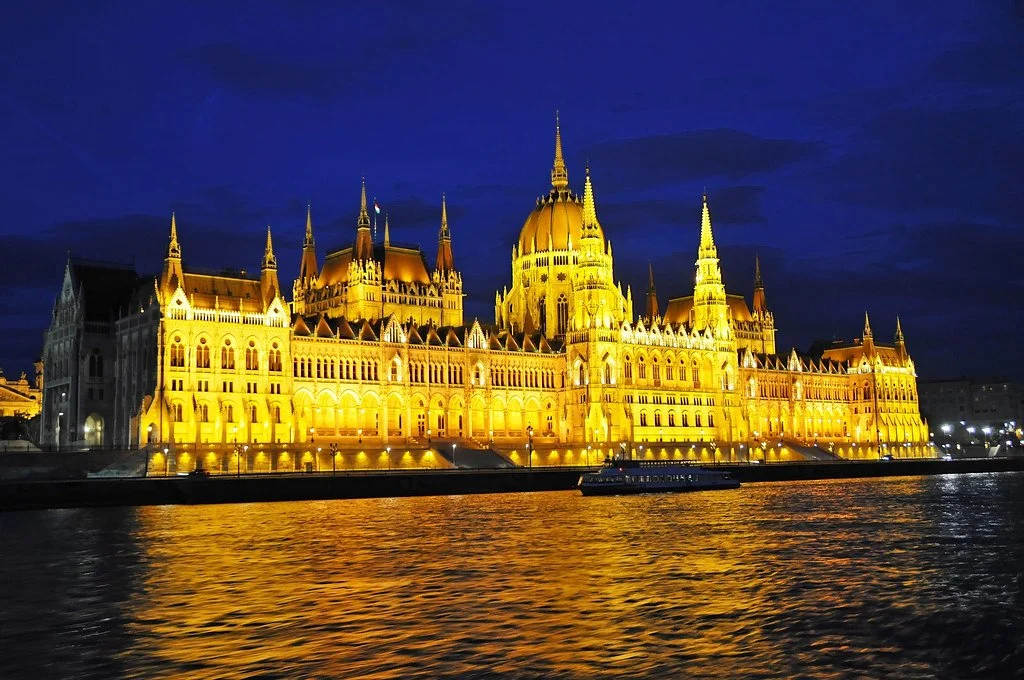
Picture two people of Hungarian descent. The first lives in Romania; they have never resided within Hungary’s current territorial boundaries, yet they speak Hungarian, identify culturally as Hungarian, and apply for citizenship under the 2010 “simplified naturalization” regime. The provision allows them to secure citizenship on the basis of ethnic identification and states, “a non-Hungarian citizen whose ascendant was a Hungarian citizen or who can substantiate being of Hungarian origin may be naturalized on preferential terms, if they prove that they are sufficiently proficient in the Hungarian language.” The Hungarian state welcomes her into the political community.
Read More
Prediction Markets and the Limits of Federal Power
On election night in November 2025, the culmination of months of trading, the results were not just reported—they were traded. On platforms such as Kalshi and Polymarket, users bought and sold “event contracts” on whether a candidate would win, with prices shifting in real time as new information came in. In the New Jersey governor’s race, Kalshi’s market indicated that Mikie Sherrill would win more than thirty minutes before any major news outlet called the race. As the result became clearer, contracts that had been trading at steep discounts moved rapidly toward full value, tracking the implied probability of the outcome as it changed. [1] What looked like a new form of civic participation also raised a classification problem under the Commodity Exchange Act. More fundamentally, it raises a question of federalism. Absent a clear statement from Congress, should federal derivatives law be read to displace state and tribal authority over gambling?
Read More
Training Harm: Reinterpreting the Fourth Fair Use Factor in the Age of Generative AI Music Aanya Bansal
Generative artificial intelligence (AI) has begun to reshape the music industry in ways that are difficult to ignore. Today’s models can produce songs that replicate not only the structure of existing works but also the stylistic and expressive qualities associated with particular artists. These systems are not experimental tools operating at the margins. They are developed and deployed by commercial AI companies, such as OpenAI, Anthropic, and Google DeepMind, seeking to monetize generative outputs at scale. Unsurprisingly, copyright holders, especially record labels, have responded with litigation, arguing that the use of copyrighted sound recordings and lyrics in model training constitutes unlawful appropriation. At bottom, these disputes force courts to confront a familiar question in an unfamiliar context: how should the economic consequences of AI training be evaluated under the fair use doctrine?
Read More
The Algorithmic Age of Antitrust: Rethinking the Consumer Welfare Standard for Big Tech
Are we becoming a nation mined for our data and attention? And what legal limits, if any, constrain the firms that profit from this extraction economy? Today’s dominant technology firms not only collect behavioral and transaction data, but also integrate, analyze, and leverage it as part of their market power. Big Tech refers to the specific firms Alphabet (Google), Meta (Facebook), Apple, Amazon, and Microsoft, as these firms have platforms that depend on massive data collection, extensive market reach, and a large customer base while offering free or low-cost services to consumers. “Big Tech” shapes the information economy in ways that outpace the ability of federal courts and antitrust enforcement agencies to respond. The rapid rise of generative artificial intelligence (“AI”) amplifies these dynamics by creating new forms of market power and anticompetitive risks, particularly price-fixing. This article examines how Big Tech’s use of AI systems interacts with existing antitrust doctrine. By doing so, it argues that the consumer-welfare standard, which has governed U.S. antitrust for nearly half a century, is poorly equipped to evaluate AI-mediated conduct in digital markets.
Read More
Reining in Relief: Trump v. CASA and the Judicial Retreat from Nationwide Injunctions
In the last decade, nationwide injunctions have emerged as essential judicial tools for preventing constitutional violations from taking effect on a national scale. District courts halted challenged executive orders and laws before they could inflict broad harm. But in Trump v. CASA, Inc. (2025), the Supreme Court sharply curtailed that authority, holding that district courts may issue relief only to the specific plaintiffs before them. [1] By restricting nationwide injunctions, the Court in Trump v. CASA effectively limits the judiciary’s capacity to serve as a structural check on executive overreach, reframing the role of district courts from protectors of nationwide constitutional rights to narrowly constrained arbiters of local disputes. This article argues that the shift away from nationwide injunctions threatens both judicial coherence and equal protection under the law. The argument analyzes how the majority’s formalism narrows equitable power and how the decision fragments constitutional enforcement.
Read More