A Constitutional Analysis of Trump’s Gold Card Visa Program
On September 19, 2025, President Donald Trump issued an executive order creating the Gold Card Visa Program, which would enable noncitizens who contribute considerable amounts of money ($1 million individually or $2 million corporately) to gain hastened eligibility for an immigrant visa, though still following national security and public safety review. The announcement sparked public concern as people wondered whether the president had the authority to establish a novel immigration category, given that immigration policy-making lies exclusively within Congress’s constitutional powers. Many years of existing precedent reinforces the idea that other branches may not infringe on Congress’s lawmaking authority to preserve the importance of checks and balances. Because the wealth-based immigration category created under the Gold Card Visa falls outside statutory authority, the Court should deem the President’s action unconstitutional.
Read More
Reopening the Door to Racial Profiling: The Fourth Amendment After Noem
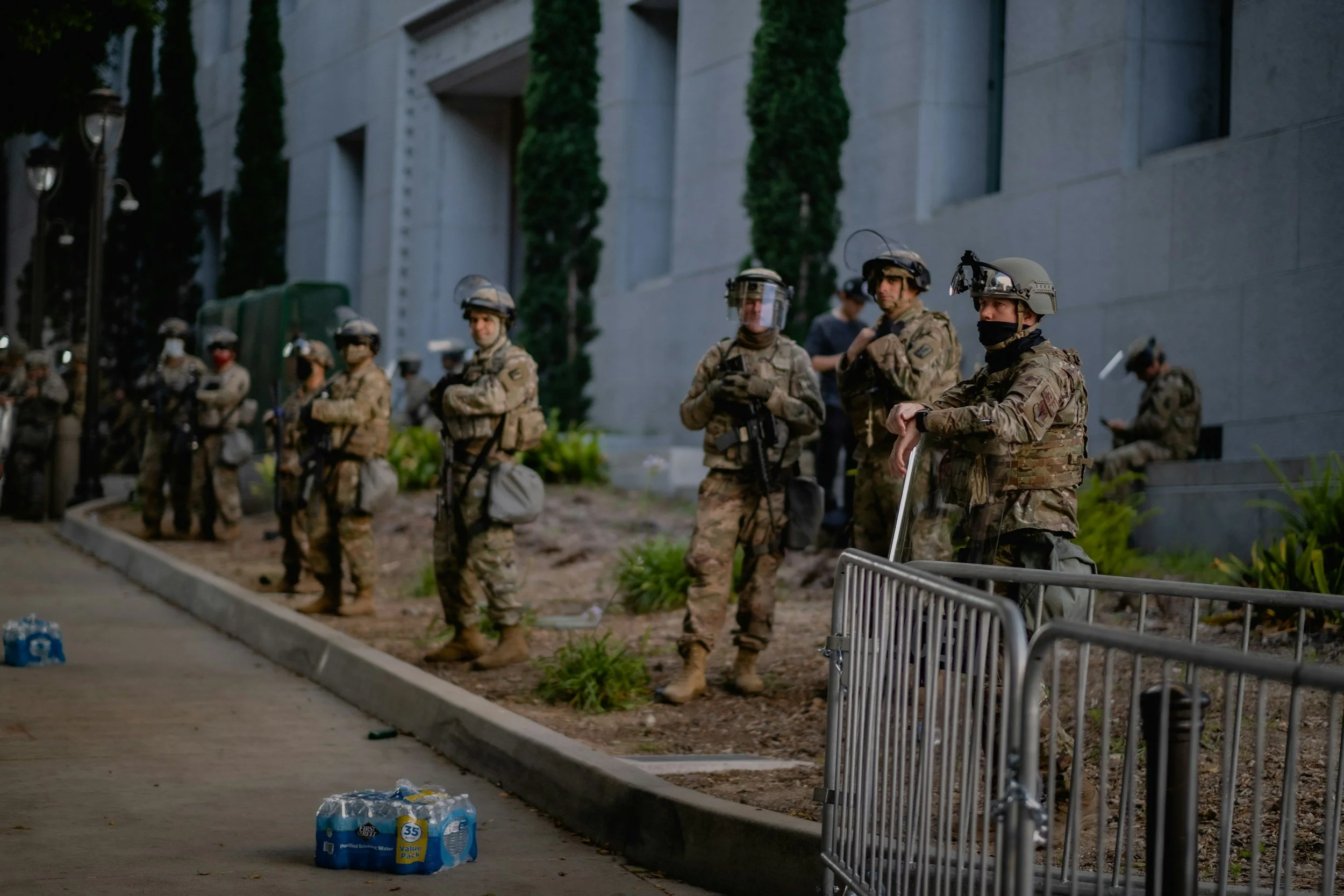
In September 2025, Los Angeles residents woke to the sound of sirens and helicopters as federal agents swept through car washes, construction sites, and local markets. The operation, called “Operation At Large,” led to the arrest of hundreds of Latino workers within hours. That same morning, the Supreme Court quietly reinstated the raids on its emergency docket in Noem v. Vasquez Perdomo (2025). The decision allowed immigration authorities to resume detentions even as evidence of racial profiling mounted. Justice Kavanaugh’s opinion treats race, language, and occupation as “relevant factors” when determining reasonable suspicion, a line of reasoning that belongs to the racial profiling the Court rejected fifty years ago in United States v. Brignoni-Ponce (1975). At the same time, the majority relies on Los Angeles v. Lyons (1983) to limit who can bring challenges against enforcement programs, shutting out the very communities that face repeated violations. Together, these moves weaken both the Fourth Amendment’s protection against unreasonable searches and the ability to seek relief through the courts.
Read More
Applications of the UN Charter’s Article 51: The Use of Self-Defense in Outer Space
In 2022, Russia invaded Ukraine on the premise of protecting its citizens abroad. In particular, President Putin justified his aggression against Ukraine by claiming that those residing in Ukraine’s Donetsk and Luhansk regions desperately required aid, resulting in his invocation of Article 51 of the United Nations (UN) Charter. The use of force in international politics is a contested factor that remains relevant and predominant throughout discussions of global security. This is primarily because the UN Charter’s strict ban on the use of force is contradicted by Article 51, which affirms the right to self-defense. Article 51 dictates, “Nothing in the present Charter shall impair the inherent right of individual or collective self-defence if an armed attack occurs against a Member of the United Nations….”
Read More
Journalistic Implications of AI: Trademark Dilution in The New York Times v. Microsoft
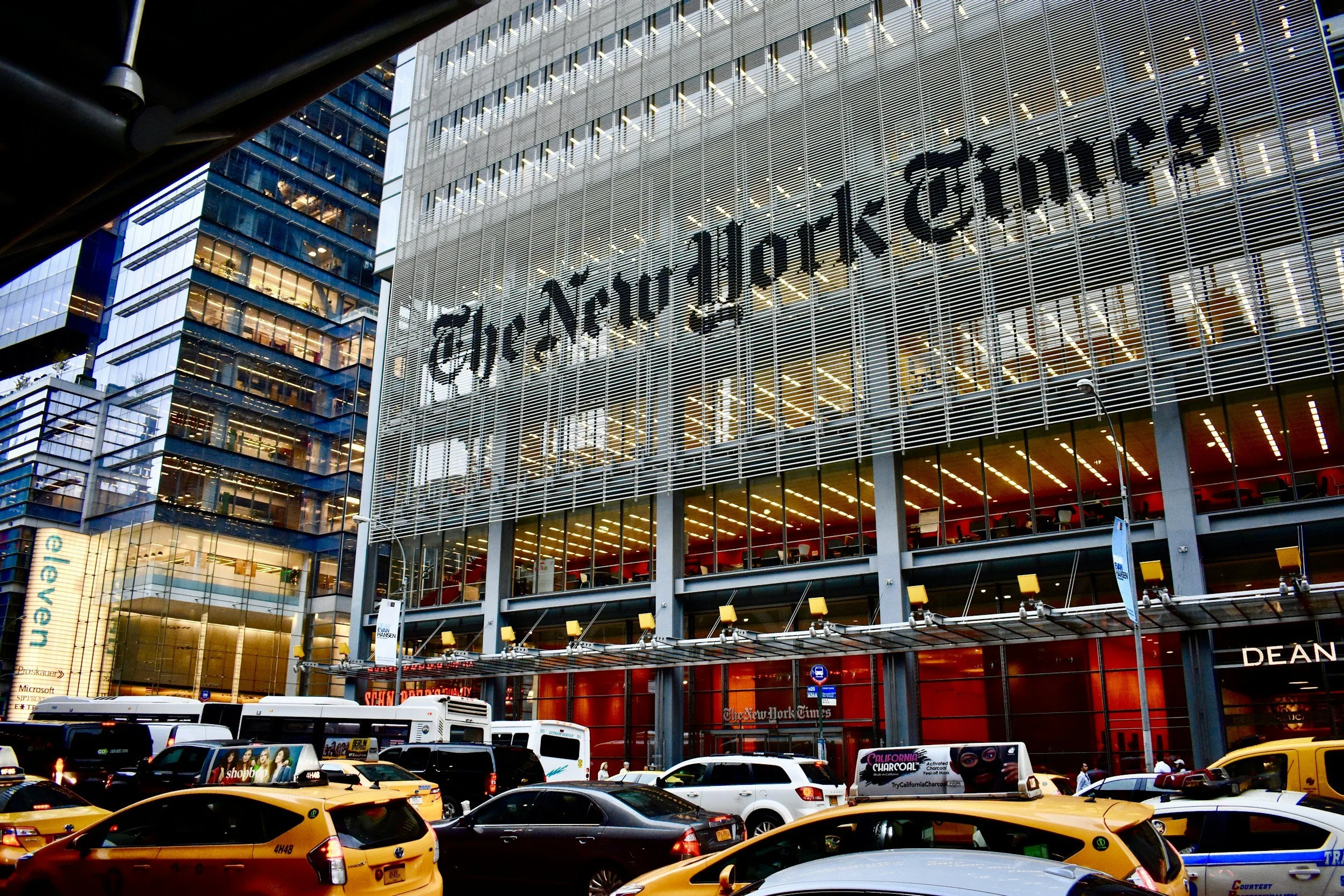
If someone published thousands of posts every day that incorrectly attributed false or misleading information to a certain newspaper, it would harm the newspaper’s reputation. In most cases, the remedy for this is straightforward: injunctive relief. In 2023, The New York Times found itself in this position, except the source of trademark dilution was slightly more complicated. The publisher allegedly tarnishing their reputation is an AI model—ChatGPT. The case began when a group of newspapers led by The Times sued OpenAI and Microsoft, which owns a 27% stake in OpenAI, for copyright infringement and trademark dilution. While the copyright-centered facets of this case have attracted significant attention, the trademark dilution claims by The Times have received relatively little commentary, despite having monumental implications for the future of journalism and generative AI as a source of news.
Read More
Drawing the Border: How Self-Determination and Territorial Integrity Do Not Conflict Within International Law
The year is 1991, and the Soviet Union (USSR) has suddenly fallen apart. The collapse of the decades-long global superpower heralded in a “post-Soviet blip” characterized by an influx of independence movements. To ensure stability in the immediate aftermath of the state's dissolution, the doctrine of uti possidetis juris––a principle that affirms the inviolability of borders––was applied, which translated the boundaries of the USSR’s fifteen Republics into new international boundaries. However, this arrangement, which amounted to the repurposing of Soviet drawn borders, did not quiet all demands for self-determination. One notable example was the case of Chechnya. Due to its status as an autonomous oblast––an administrative subregion within the USSR––Chechnya did not qualify to have new independent boundaries formed under the previously mentioned application of uti possidetis juris. Nonetheless, Chechnya invoked its right self-determination and argued that it could never assert self-determination within the constitutional structure of the Russian Federation, citing a long history of oppression by Russians that includes the 1944 deportation of Chechens conducted by the Soviet Union.
Read More
Jurisdictional Fragmentation and Corporate Impunity in Transnational Human Rights Litigation
In 1996, Nigerian villagers in Ogoniland filed a lawsuit in the Southern District of New York against Royal Dutch Shell, alleging complicity in torture, extrajudicial killings, and environmental devastation caused by decades of oil extraction in the Niger Delta. Their claim was one of the first major attempts to hold a transnational corporation accountable for human rights violations committed abroad. Although the case, Wiwa v. Royal Dutch Shell (2009), resulted in a settlement between the two parties, it also showed that while these corporations have huge power and resources that can impact communities worldwide, there are still no binding international legal mechanisms that hold them accountable for their human rights violations and environmental harms.
Read More
Fortify the Fuel: An Examination of the Legal Legitimacy Behind Immunizing Fossil Fuels
If Big Oil is granted a legal shield, the courthouse doors would shut for Americans seeking accountability for the role corporations played in contributing to extreme weather damage. Such an action would establish a precedent of prioritizing corporate interests over community well-being and would shift the fiscal consequences of climate change onto taxpayers. Additionally, fossil fuel immunity claims should be considered illegitimate attempts to constitutionalize an economic interest and violate states’ regulatory power to impose environmental standards. Previous environmental cases have substantiated the lack of federal prerogative and accountability in climate action, and precedent has determined states’ constitutional power to enshrine environmental rights.
Read More
Required Deepfake Labeling: Contradicting or Supporting The First Amendment?
In the roughly 235 years since the First Amendment was ratified, advanced AI has occupied only about two percent of that time, yet its implications for privacy, defamation and fraud are already profound. In these few short years, the rise of synthetic media and “deepfakes” have already prompted both the United States Congress and numerous state legislatures around the country to create laws that aim to limit their potential harm. Yet, these laws face a constitutional challenge — the First Amendment's protection of speech, which extends to content that may be false, manipulative, or offensive, unless it can be tied to causing legally-recognized, demonstrable harm. Deepfake regulation must more accurately target demonstrable harms like privacy invasion, defamation, and fraud, as accurate deepfake regulation is crucial to the upholding of First Amendment principles. Broad or content-based bans risk being struck down as unconstitutional, but narrowly tailored rules, such as factual labeling requirements paired with harm-focused enforcement, can lessen real-world harms without restricting protected speech.
Read More
Defining, Not Creating: The Constitutional Foundation of Same-Sex Marriage
Since the landmark 2015 decision in Obergefell v. Hodges, an estimated 900,000 same-sex couples have been married in the United States, reshaping both law and public life. The ruling declared that the freedom to marry is a fundamental right guaranteed by the Fourteenth Amendment, a conclusion celebrated as long overdue by some and commended a judicial overreach by others. The Constitution, like the nation it governs, is not static. Its interpretation evolves as courts and citizens revisit what liberty and equality require in changing times. Nearly a decade after Obergefell, Ermold v. Davis (2025) now tests whether that evolution reflects genuine constitutional principle or an act of judicial creation.
Read More