Haaland v. Brackeen Explored: The Constitutional Defensibility of ICWA
The United States’ troubled history with Native people is an extensive one. Notorious for forcibly and unjustifiably removing Native children from their homes and families, the U.S. government’s conscious effort to strip Native peoples of their community ties was reinforced by legislation set to undercut Indigenous rights. As one historical data point, the Civilization Fund Act, codified into law by President James Monroe in 1819, established church-run “Indian boarding schools” with the aim of forcibly assimilating Native children. [1] For over a century, Native children were forcibly removed from their homes, rehoused with white families, and placed into these “schools”, effectively stripping them of their identities, languages, and beliefs.
Read More
In No One’s “Best Interest”: The Hidden Racialized Impact of the Family Regulations System
Every year, state officials conduct about two million child welfare investigations, subjecting children and their families to home searches, physical examinations, and interviews. [1] While such investigations sometimes reveal instances of abuse or neglect, many families are forced through the intrusive process for seemingly no reason at all; in 2002, only twenty-eight percent of the two million investigations were later substantiated. [2] Most surprisingly, the Fourth Amendment requirements of a particularized warrant and probable cause do not apply to suspected cases of child abuse, despite child welfare investigations bearing strong resemblance to criminal ones. [3] As a result, investigations can occur following a single, anonymous phone call or for reasons as trivial as not having the technology needed for the child to participate in virtual learning during COVID-19. [4]
Read More
Why the U.S. Should Add Gender as the Sixth-Ground for Asylum
In 2021, Attorney General Merrick Garland vacated Matter of A-B: a Trump-era decision that denied domestic violence as a viable social group classification for those seeking asylum protection. [1] Albeit a massive step in the right direction, ambiguity surrounding asylum law and whether or not it extends to gender still riddles the immigration system, especially given the rise in Central Americans arriving at the U.S.-Mexico border. [2] For instance, in the case of Gleidy Yessenia Jaco, a Honduran asylum seeker fleeing domestic abuse and repeated death threats, the Fifth Circuit disregarded existing precedent by rejecting her pro se appeal in 2021. [3] Currently, international and domestic law enumerates five grounds on which individuals can plead asylum on account of a “well-founded fear” of persecution: race, religion, nationality, political opinion, or membership in a particular social group. [4] Given that the grounds are outdated, originate from a male-centric context, and do not directly pertain to those escaping gender-specific persecution, membership in a particular social group remains the most commonly applied avenue for migrants fleeing gender-based violence. However, selective criteria under the Board of Immigration Appeals (BIA) make qualifying under these terms difficult, resulting in inconsistent decisions that rely on partisan biases. To address ongoing confusion and provide a more cohesive framework, the United States should add gender as the sixth ground for asylum under its refugee definition.
Read More
The Loss of the Right to Vote and its Role in the Effective Assistance of Counsel
The Sixth Amendment guarantees anyone accused of a crime the right to “have the assistance of counsel for his defense.” [1] However, uncertainty over what “assistance of counsel” entails remains, leading to complex court cases across the country. When a defendant faces the court and decides whether they will plead guilty or not guilty to the charges against them, their counsel weighs the consequences of a guilty plea, often categorized into two types: immediate and collateral. Immediate consequences are punishments like fines, detainment, and prison time, and are often the primary basis for a legal counsel’s advice. Yet the collateral consequences of a defendant's guilty plea are often ignored—though they are just as important.
Read More
How Artistic Prints of a Legendary Artist May Impact the Scope of Copyright’s Fair Use Doctrine
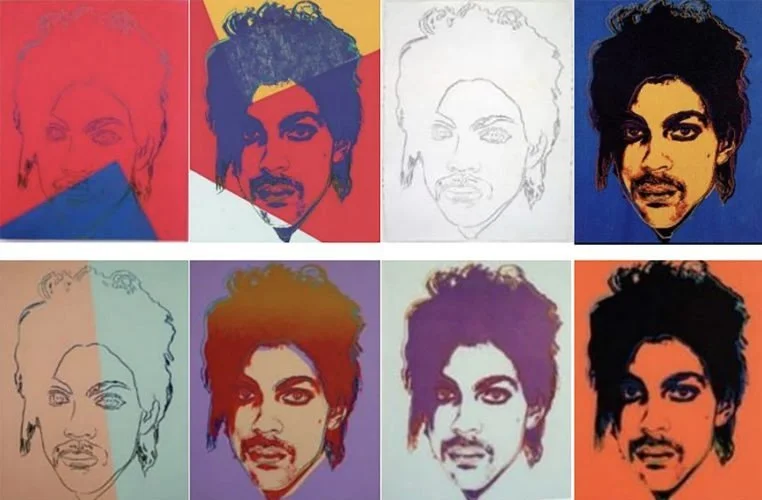
On October 12th, 2022, the Supreme Court heard arguments for Andy Warhol Foundation for the Visual Arts, Inc. v. Goldsmith (“Warhol”). [1] This highly-anticipated case regarding copyright law involves two great artists of the last century, visual artist Andy Warhol and award-winning photographer Lynn Goldsmith. At issue is a dispute over Warhol’s “Prince Series” collection, based on a photograph of the musician Prince Rogers Nelson taken by Goldsmith. [2] Centered on the subject of visual arts and the underlying issue of whether Warhol fairly used Goldsmith’s photograph, this case reflects a crucial opportunity for the Court to clarify copyright protections.
Read More
Corporate Personhood: A Limit to Corporate Empowerment
Following the U.S. Supreme Court’s decision in Citizens United v. Federal Election Commission (2010), the American public has grown increasingly wary of the Court’s enshrinement of corporate rights. [1] In Citizens United, the Court majority interpreted campaign spending as an exercise of free speech, more specifically political speech, and granted corporations protection from government restrictions on campaign spending. In doing so, the Court seemingly opened the floodgates to an increased volume of corporate rights cases—emerging at a level much higher than previous decades. [2]
Read More
Governing The Galaxies: Analyzing Tort Applicability in Space
In the twenty-first century, interstellar travel has captured the curiosity of millions around the world. If the intrepid space missions of Jeff Bezos and Elon Musk are any indication, creating a multi-planetary society or traveling to Mars for vacation could soon be our reality. However, the space ventures of SpaceX and Blue Origin pose a multitude of potential threats to safety in outer space and on planet Earth. In turn, this new frontier presents a multitude of new considerations when it comes to the applicability of law in space. While space crimes are few and far between, there is a plethora of unanswered questions regarding tort applicability in space: whether there is a legal basis upon which space law can be applied to private individuals and firms, what conflicts can occur domestically and internationally in the absence of tort law, and whether it is possible to reconstruct the space governance framework in a way that ensures effective enforcement. International agencies and governments must elaborate upon the application of torts, particularly negligence and nuisance, and their applicability to space debris in new governing frameworks. Furthermore, new standards of liability must be defined for torts to private individuals and firms that arise in outer space.
Read More
Faith-Based Arbitration: First Amendment Freedom or Major Concern?
The right to freely exercise religion, listed as one of the first rights in the First Amendment, is undoubtedly a bedrock principle of American constitutional law. What happens, then, if a group of individuals were to willingly execute a contract restricting themselves to a certain set of religious rules? A case recently appealed to the Supreme Court, Church of Scientology International v. Bixler (2022), dealt with this very question. The Respondents were a group of women, including Chrissie Carnell Bixler and two Jane Doe’s, who sued for alleged sexual assault by a church member, Daniel Masterson. However, the women originally signed a contract agreeing to resolve any disputes by arbitration within their church and its rules of procedure. Later, they left the faith, and were sued by the Church in order to bind them to the agreement. The Church claimed that the arbitration agreement is an enforceable contract—requiring them to abide by Scientology rules, regardless of faith. The California Court of Appeal, however, sided with the Respondents to not enforce the arbitration agreement, on the grounds that their change in beliefs would free them of their contractual obligations under the free exercise clause of the First Amendment. [1]
Read More
The Post-Dobbs Legality of Out-of-State Abortion Travel Bans
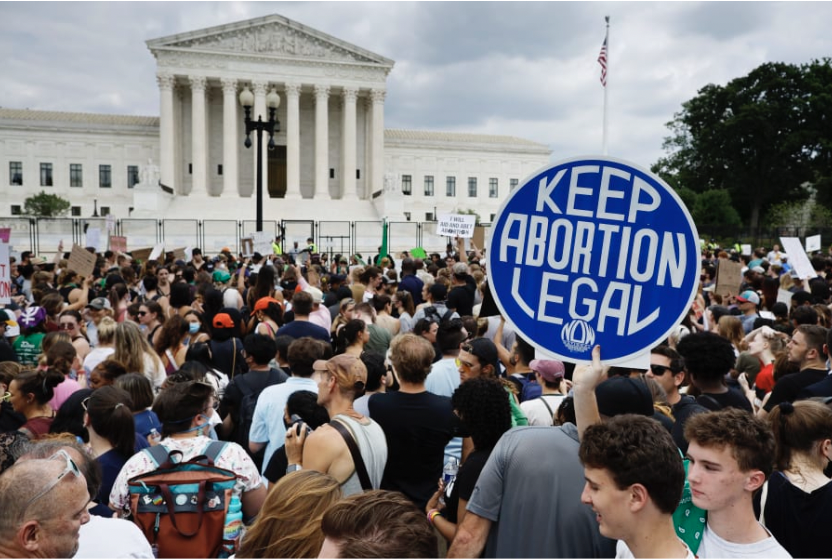
On June 24, 2022, with the case Dobbs v. Jackson Women’s Health Organization, the U.S. Supreme Court overturned its 1973 ruling in Roe v. Wade, setting off a cascade of abortion bans in 26 states. [1] However, lawmakers in several states, such as Arkansas, South Dakota, Texas, and Missouri, are now considering even further bans that would prevent women from traveling to obtain an abortion in a state where it is legal. Such bans could also potentially outlaw anyone from “aiding and abetting” travels for abortion purposes. [2] When reviewing the Constitution and subsequent Supreme Court and lower court decisions, it is clear that these laws are unconstitutional. Out-of-state abortion bans do not have legal standing due to protections by the Commerce Clause and the Privileges and Immunities Clause of the Constitution, as interpreted by various courts.
Read More