Discrimination Gone Too Far: The Implications of Defining Mutability in Court
While most Americans would agree that one should not be blatantly discriminated against on the basis of sex, race, or religion, as an egalitarian maxim it becomes much more difficult to maintain when seemingly alterable and/or non-biological traits come under scrutiny. Defining aspects of a person such as language use, cultural practices, or body type, for example, leave open the debate over what characteristics are, in fact, given legal protection against discrimination.
Read More
Municipality or State? A Call to Localize Mandatory Vaccination Codification
Since October 2018, the state of New York has witnessed over 700 cases of measles.[1] Although the illness is a highly contagious respiratory infection, it is entirely preventable through vaccination. While such modern-day measures are in place, the state of New York has found itself in the grips of a burgeoning social phenomenon: the anti-vaccination movement.
Read More
Freedom to Innovate: The Paradox of Patentability in Pharmaceuticals Today
As a few of the many diagnostic companies that are pioneers of medical innovation in the modern age, these pharmaceutical businesses are rolling out new, precise drug therapies at an unprecedented rate to combat specific medical issues by introducing diagnostic methods based on new technologies. The current age of biotechnology continues to challenge lawmakers as innovation unfolds faster than the current existing protective legislature. But no legal issue is more prominent in the biotechnological industry than ownership rights to these new developments.
Read More
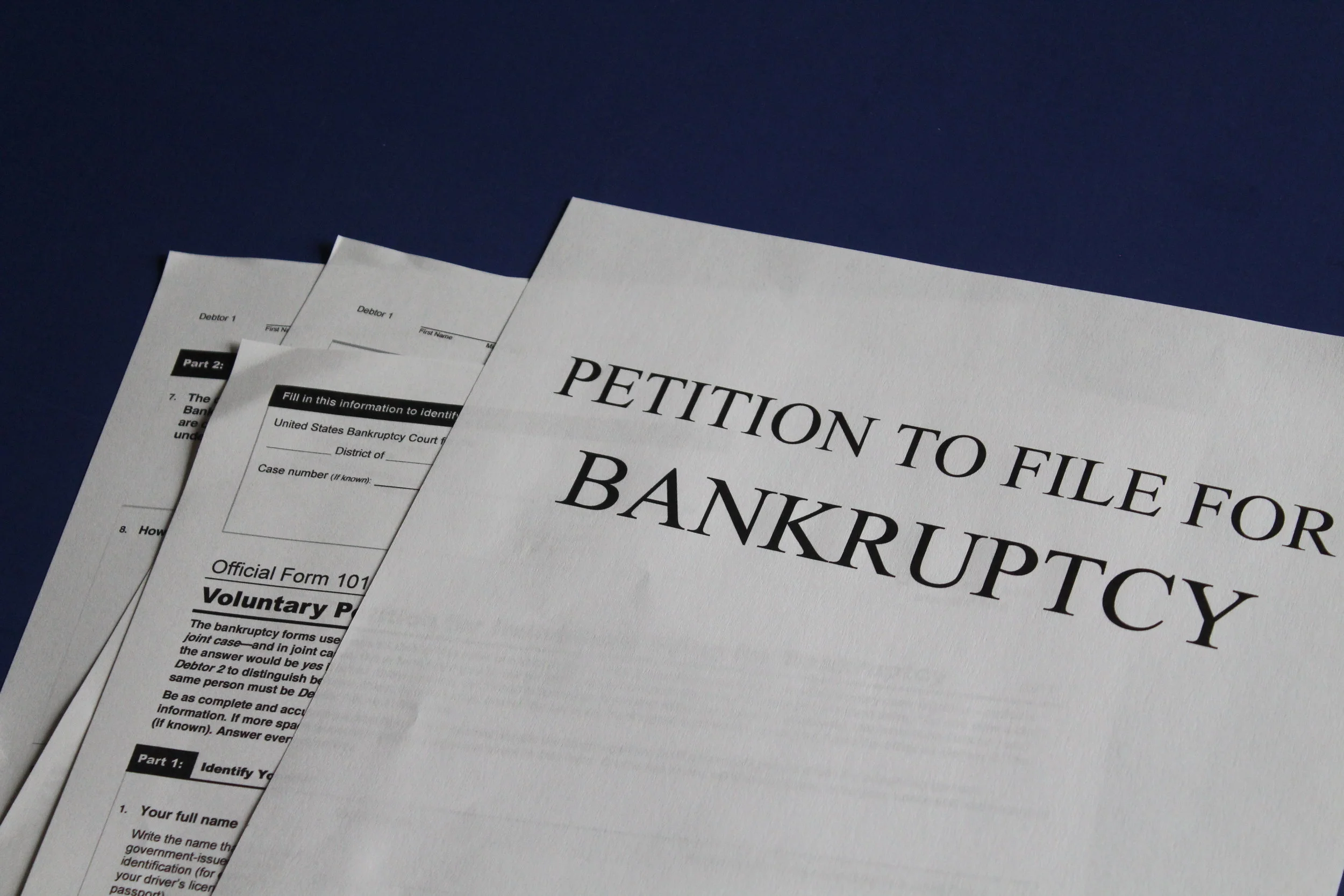
The Ambiguous Jurisdiction of Bankruptcy Courts
As Michael Scott once learned, screaming “I declare bankruptcy!” into the void does not resolve a solvency problem. Yet a series of recent U.S. Supreme Court cases has revealed ambiguities in bankruptcy procedure within the American legal system. The core issue lies in the organizational difference between U.S. Bankruptcy Courts and other federal courts.
Read More
Urban Dictionary: The New Expert Witness?
Beyond the evident free speech questions that Iancu v. Brunetti poses, the case also has brought attention to the forms of evidence presented in court. In its argument in linking the name “Fuct” to its implied expletive counterpart, the USPTO provided an Urban Dictionary definition of ‘fuct,’which defined the term as the past tense of the verb ‘fuck,’’ finding the term to be ‘recognized as a slang and literal equivalent of the word “fucked,”’ with ‘the same vulgar meaning.’”
Read More
Bakke, Bollinger, and Blum: Reflections on A Half-Century of Affirmative Action Policies in Higher Education
When the Class of 2023 joins Columbia’s campus later this fall, many students will have Les Goodson and Gregory Peterson to thank. In the fall of 1969, nearly 50 years ago, they too joined Columbia’s community as undergraduates, making their trek down College Walk as some of the earliest black students admitted to Columbia after the civil rights push of the 1960’s and 70’s.
Read More
Data Protection and the Fourth Amendment: The Implications of Airbnb, Inc. v. City of New York
In August 2018, a New York City bill that required data-sharing between short-term apartment rental platforms and New York law enforcement was signed into law and scheduled to take effect in February. The new legislation mandated that home-sharing companies share troves of hosts’ personal information with the New York City Office of Special Enforcement (OSE) on a monthly basis. In response, Airbnb, the largest home-sharing platform in New York, filed for a preliminary injunction before the law was set to take effect.
Read More
Law, Normativity, and Violence
By living and aging in the United States, many Americans assume the goodness, the neutrality, and rationality of law. Some even judge the morality of others based on their adherence to these legal regulations, without critiquing the merits or source of the law itself. Others recognize that some laws unequivocally create unjust worlds and resist them actively. Few, however, question the very nature of law as a systemic means of regulating and organizing the social Normative, arising not from objective and liberal ‘truth’, but from “a human desire for reliability and pattern that protects a finite being from a chaotic world.”
Read More
Axed at the Top: The Case for Modernizing our Age Discrimination Laws
This question posed by Mount Lemmon Fire District v. Guido is a microcosm of a much bigger issue. In recent years, the United States Supreme Court has been frequently tasked with filling in the holes left by incomplete legislation, a task of interpretation that readily encroaches on the law-writing duties entrusted to the Congress by the Constitution. Especially in the area of age discrimination regulation, the task of flushing out crucial details has been relegated to the courts. In order to properly understand this issue, some terms need to be defined.
Read More